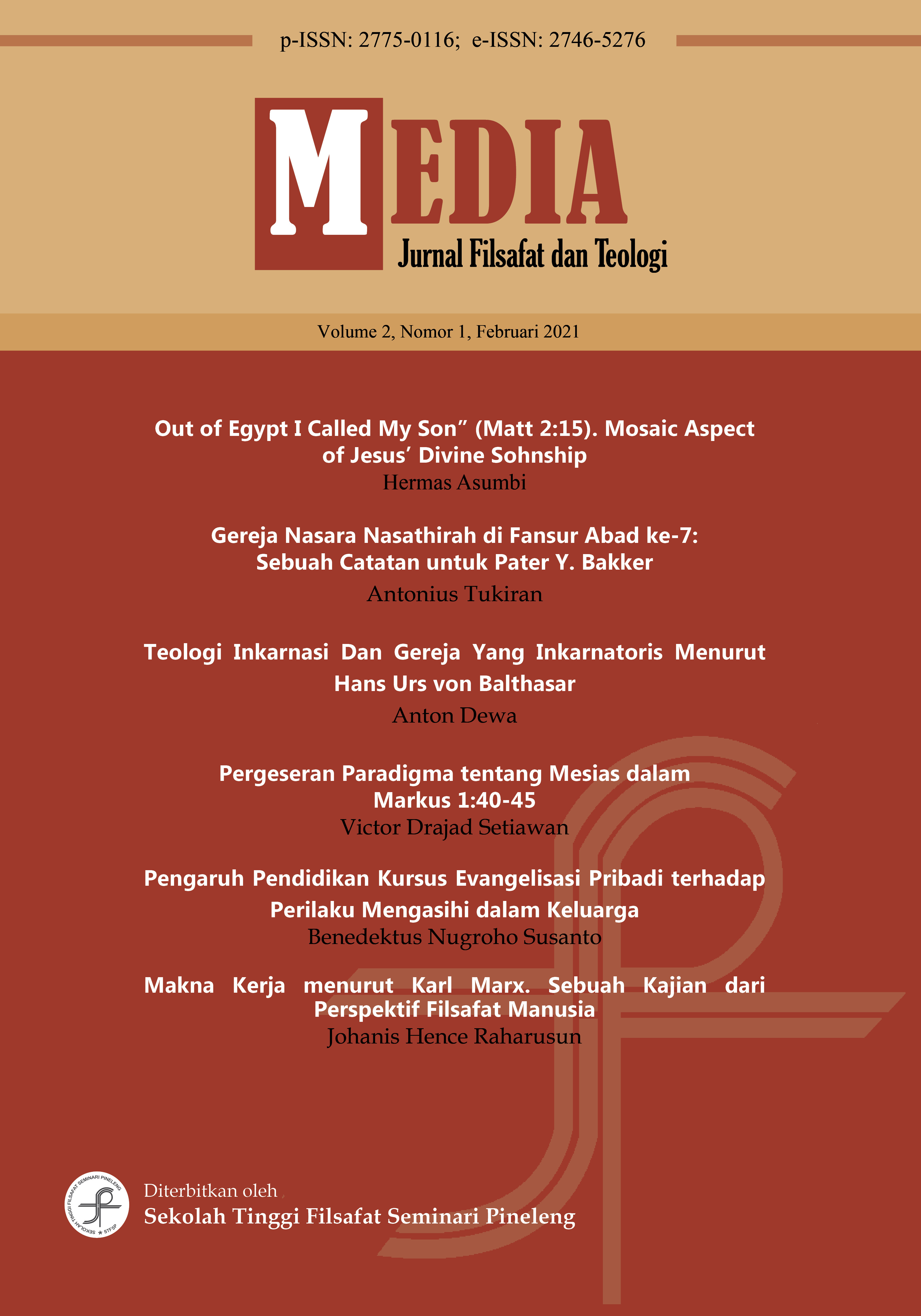
“Out of Egypt I Called My Son” (Matt 2:15)
Mosaic Aspect of Jesus’ Divine Sonship
DOI:
https://doi.org/10.53396/media.v2i1.22Abstract
“Out of Egypt I called My Son” is a quotation from Hosea. Matthew’s use of it as a ‘direct prophecy’ is considered problematic by some scholars for Hosea wrote it as a merely historical reflection. How should we resolve this problem? Typological approach might be the best way to understand it by which consideration of the events around Jesus’ birth as the fullest expression of divinely intended fulfillments of Old Testament “prophecies” is possible. The evangelist presents double typologies: on one hand, he retrospectively refers to the exodus of Israel and applies it to “new exodus” through Jesus, but on the other hand, he refers to Moses and presents discontinuity and continuity of the divine work of salvation in the person of Jesus. He highlights the Mosaic aspect of Jesus’ divine sonship which underlines further his presentation of Jesus as David’s son (1:1) and his messianic and royal role in the coming of the Kingdom of God (4:17).
Downloads
Published
How to Cite
Issue
Section
License
Copyright (c) 2021 Hermas Asumbi

This work is licensed under a Creative Commons Attribution 4.0 International License.